

Introduction
Located in the heart of Peru’s Sacred Valley, the Maras Salt Mines offer visitors a unique glimpse into an ancient method of salt production that has been used for centuries. Although Machu Picchu tends to steal the spotlight, these fascinating salt terraces provide a quieter but equally impressive experience. A visit to Maras is not only a journey back in time to the era of the Incas, but also an opportunity to witness the continuity of traditional Andean practices that have stood the test of time. In this guide, we will delve into the history, significance, and experience of visiting the Maras Salt Mines, making them a must-see for travelers seeking an authentic Peruvian adventure.
Table of Contents
Quick Facts About the Salt Mines of Maras
A Brief History of Maras and Its Salt Mines
How Salt is Harvested at Maras
What to Expect on Your Visit to the Salt Mines
The Best Time to Visit the Salt Mines of Maras
Why Visit the Salt Mines of Maras?
Nearby Attractions: Making the Most of Your Sacred Valley Visit
Practical Information for Your Visit
Final Thoughts: Why Maras is a Hidden Treasure
Quick Answer:
The Maras salt mines, located in Peru’s Sacred Valley, are a series of terraced salt pans that have been in use since pre-Inca times. These salt pans are fed by a salt-rich spring, and locals continue to use traditional methods to extract the salt. Maras offers a unique cultural experience where visitors can explore a centuries-old practice, take stunning photos, and learn about the history of the region and the importance of salt to the local community.
Facts About the Maras Salt Ponds
Location: The Maras salt mines are located about 25 miles north of the city of Cusco, Peru.
Altitude: Approximately 11,000 feet above sea level.
Historical significance: Salt production here dates back to pre-Inca times and was later expanded by the Incas.
Current use: The salt pans are still operated by local families who have been harvesting salt in the same way for generations.
Size: There are over 3,000 individual salt pans, spread across a valley that stretches for several kilometers.
A Brief History of Maras and its Salt Flats
The origins of the Maras salt mines date back to long before the Incas. Archaeologists suggest that the area was used for salt production as early as the pre-Inca period. The first settlers in this area, believed to have come from the Wari civilization, recognized the importance of the salt spring that flows from the mountain.
When the Incas arrived in the region, they expanded the techniques of salt production. Maras became a key source of salt for the Inca Empire, which needed large quantities for food preservation and ceremonial purposes. The salt production process was highly organized, and the terraces of Maras were built to make the process more efficient.
How Salt is Harvested in Maras
The salt harvesting process in Maras is complex and labor-intensive, and has remained virtually unchanged for centuries. Here’s how it works:
Water supply: The salt pans are fed by a salt-rich spring high in the mountains. The salt water flows through a series of channels that distribute it across the terraces.
Evaporation: The salt water is left to evaporate in the sun, usually during the dry season, which lasts from April to October. The altitude ensures that the water evaporates quickly, leaving a layer of salt.
Harvesting: Once the water has evaporated, a thin crust of salt forms on the surface of each salt pan. Local families harvest this salt by hand, scraping the surface to collect the crystals. The salt is then dried further and stored for sale.
Harvesting techniques: The process is incredibly manual. Local families use traditional tools such as wooden shovels and small rakes to harvest the salt, a practice that has been passed down from generation to generation.
What to expect from your visit to the salt mines
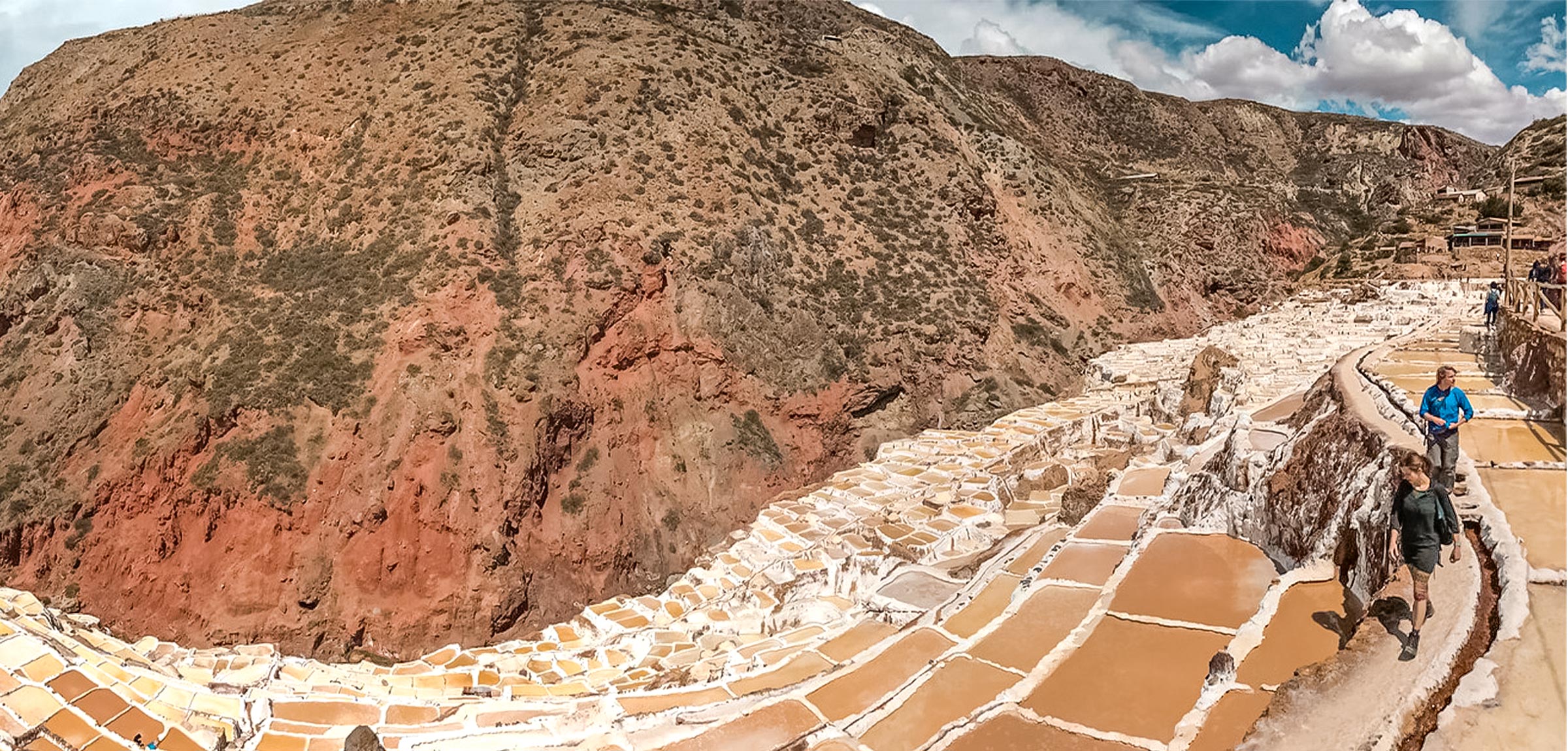
When visiting the Maras salt mines, prepare for a sensory overload, both visual and cultural. The vast expanse of salt pans, glistening in the sunlight, creates an almost surreal landscape. As you walk through the terraces, you will see firsthand the ancient techniques that are still used today.
Here’s what you can expect:
Panoramic views: The salt mines are located on a hillside, offering breathtaking panoramic views of the valley. The contrast between the white salt flats and the earthy tones of the surrounding mountains and fields is striking.
Interactive experience: Some tours allow you to get up close to the salt flats, and you may even be able to try harvesting salt, depending on the season. It’s a great way to connect with the local community and learn about their daily lives.
Cultural insights: As you tour the salt mines, you’ll have the opportunity to learn from local guides about the history of the area, the importance of salt to indigenous peoples, and the current cultural practices of local families.
“If you’re looking to explore this incredible site, our Maras Moray tour offers a perfect opportunity to experience it firsthand.”
The best time to visit the Maras salt mines
The best time to visit the Maras salt mines is during the dry season, from April to October. This is when the salt flats are in full operation and the evaporation process reaches its peak. The warm weather and clear skies are perfect for taking photos opportunities.
During the rainy season (from November to March), the salt pans may be less active, and there’s a higher chance of rain, which could make the terrain slippery.
Why Visit the Maras Salt Mines?
There are several compelling reasons to visit the Maras salt mines:
Historical significance: The salt mines offer a direct link to ancient Andean cultures, including the Incas, and provide insight into their advanced agricultural and production techniques.
Cultural connection: You will have the opportunity to meet local families who still practice traditional salt harvesting methods, providing a unique cultural exchange.
Stunning views: The salt mines are located in one of the most picturesque areas of the Sacred Valley, offering incredible photo opportunities and beautiful scenery.
A unique experience: Unlike more crowded sites such as Machu Picchu, Maras offers a quieter and more authentic experience, where you can truly immerse yourself in the culture and history of the region.
Nearby attractions: Make the most of your visit to the Sacred Valley
If you visit the Sacred Valley, there are other attractions near Maras that you can explore:
Moray: Located a short distance from Maras, Moray is a fascinating Inca agricultural site with concentric circular terraces used for agricultural experiments.
Chinchero: Chinchero, a charming village known for its textile production and Inca ruins, is a must-see on any Sacred Valley itinerary.
Ollantaytambo: This ancient Inca city is home to impressive ruins and is the gateway to the Inca Trail.
Practical information for your visit
How to get there: Maras is easily accessible from Cusco, approximately one hour away by car. You can hire a private tour, rent a car, or take a bus to get there.
Entrance fee: Admission to the salt mines usually costs 20 soles (approximately US$5), although this may vary depending on the time of year and the specific tour package you choose.
What to bring: Wear comfortable walking shoes, a hat, and sunscreen. The altitude can make the sun feel stronger, even on cooler days.
Maras Salt Mines Faqs
1. What are the Maras Salt Mines?
Answer:
The Maras Salt Mines are a series of ancient salt evaporation ponds located in Peru’s Sacred Valley, about 25 miles from Cuzco. These terraces have been used for salt production since pre-Inca times, and the salt harvesting process remains virtually unchanged to this day. The salt is extracted from a salt spring located in the mountains, and local families continue to harvest it using traditional methods. The picturesque salt terraces create a stunning landscape, making the Maras Salt Mines a popular and unique destination for travelers.
2. How is salt harvested at the Maras Salt Mines?
Answer:
Salt harvesting at the Maras Salt Mines is a fascinating process that has been practiced for centuries. The salt pans are fed by a natural salt spring that flows from the nearby mountains. The water is channeled through a series of canals to the terraced salt pans. The water is left to evaporate under the intense Andean sun, and as it evaporates, salt crystals form on the surface. Local families manually harvest the salt from the salt pans, a laborious process that continues today using traditional tools. The salt is then dried and packaged for sale.
3. When is the best time to visit the Maras Salt Mines?
Answer:
The best time to visit the Maras salt mines is during the dry season, which lasts from April to October. This is when the salt flats are most active and the sun is strong enough to effectively evaporate the salt water. The dry season also offers clear skies and pleasant weather, making it ideal for photographing and exploring the area. During the rainy season (November to March), the salt pans may be less active and there is a greater chance of rain, which could make the terrain slippery.
4. Can I visit the Maras Salt Mines on my own or do I need a guide?
Answer:
Although it is possible to visit the Maras Salt Mines independently, it is highly recommended to go with a local guide to enhance the experience. A guide can provide valuable information about the history of the salt mines, explain the traditional salt harvesting process, and share interesting facts about the surrounding area and the cultural significance of the site. In addition, some tour companies offer combined excursions that include visits to other nearby attractions, such as Moray or Chinchero, making it easy to explore the Sacred Valley in a single day.
5. How much does it cost to visit the Maras salt mines?
Answer:
The entrance fee to the Salt Mines of Maras is typically around 20 soles (approximately 5 USD). However, the price may vary depending on the season and the type of tour you choose. Some tour packages may include the cost of the entrance fee, transportation, and a guide, so it’s a good idea to check with the tour operator for the full price. If you’re traveling independently, you can pay the entrance fee directly at the entrance to the site. Remember to bring cash, as most sites in the Sacred Valley do not accept card payments.
Final thoughts: why Maras is a hidden gem
The salt mines of Maras are one of the most unique and culturally rich experiences to be had in Peru. Maras offers the opportunity to witness a centuries-old tradition in the heart of the Sacred Valley and perfectly combines history, culture, and stunning natural beauty. Whether you are a history buff, a nature lover, or someone looking for an off-the-beaten-path adventure, Maras should be on your list of must-see destinations in Peru.